タトゥー、その芸術性
何かを成し遂げた時にタトゥーを入れると彼は言っていました。
デザインはその都度の好みだそうです。とても綺麗でした。
アンクレット代わりに入れてもいいかも・・・
現代技術で見えるタトゥーのデザインの歴史と魅力!!
Researchers Use Lasers to Study Ancient Peruvian Mummies
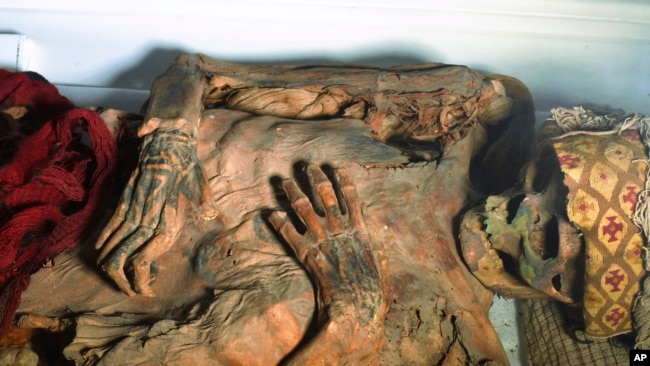
For more than 5,000 years, humans have covered themselves with permanent artistic designs known as tattoos.
In a recent study, researchers used lasers to uncover highly complex designs of ancient tattoos on mummies from Peru.
The skin of the mummies and the black liquid, or ink, used to make the tattoos permitted researchers to observe fine details. These marks are not visible to the human eye, said study co-writer Michael Pittman of the Chinese University of Hong Kong.
The researchers examined around 100 mummies dating to around 775 years ago. The mummies were from coastal Peru’s Chancay culture, which grew and developed before the Inca empire and the arrival of Europeans.
All the individuals had some form of tattoos on the back of their hands, knuckles, arms or other body parts. The study paid careful attention to four individuals with “exceptional tattoos” — designs of shapes such as triangles and diamonds, said Pittman.

It was not clear how the tattoos were created. But they are “of a quality that stands up against the really good electric tattooing of today,” said Aaron Deter-Wolf of the Tennessee Division of Archaeology. Deter-Wolf was not involved in the research.
The study results appeared recently in the publication Proceedings of the National Academy of Sciences.
Using lasers that make skin glow, “we basically turn skin into a light bulb,” said study co-writer Tom Kaye of the nonprofit Foundation for Scientific Advancement based in Sierra Vista, Arizona.
The findings were “helpful to learn about new non-destructive technologies that can help us study and document sensitive archaeological materials,” such as mummies, said Deter-Wolf.
The oldest known tattoos ever discovered are on the remains of a Neolithic man who lived in the Italian Alps around five thousand years ago. Many mummies from ancient Egypt also have tattoos, as do remains from cultures around the world.
People have used tattooing for many reasons throughout history. The marks can show cultural or individual identity, social standing, and more. Tattoos also have been used for protection against disease or to deepen relationships with spirits or gods, suggested Lars Krutak. Krutak, who works at the Museum of International Folk Art in Santa Fe, New Mexico, was not involved in the research.
Designs on ancient textile and stone products are more commonly found in good condition for study than are ancient tattoos. But ancient tattoos when studied can provide information about art forms that would not otherwise be available, suggested Martin Smith of Bournemouth University. Smith was not involved in the recent study.
Words in This Story
mummy – n. human remains that are in good condition or very well preserved
visible – adj. capable of being seen
exceptional – adj. superior, rare, much better than average
glow – v. to shine as if filled with light
light bulb – n. an electric lamp
textile – n. woven cloth, fibers, or yarn
研究者が古代ペルーのミイラをレーザーで研究(和訳)
5,000年以上もの間、人類はタトゥーとして知られる永久的な芸術的デザインで身を覆ってきました。
最近の研究で、研究者たちはレーザーを使ってペルーのミイラにある古代のタトゥーの非常に複雑なデザインを発見しました。
ミイラの皮膚とタトゥーに使われた黒い液体、インクにより、研究者たちは細かいディテールを観察することができました。研究の共同執筆者である香港中国大学のマイケル・ピットマン氏は、これらのマークは人間の目には見えないare not visibleと述べます。
研究者たちは、約775年前のミイラ約100体を調査しました。これらのミイラはペルー沿岸部のチャンカイ文化のもので、インカ帝国やヨーロッパ人の到来以前に成長と発展したものです。
すべてのミイラの手の甲、指の関節、腕などに何らかのタトゥーがありました。ピットマン氏は、この研究では、”例外的なexceptionalタトゥー”-三角形や菱形のようなデザインを持つ4人に注意を払ったと言います。
タトゥーがどのように作られたかは不明です。しかし、テネシー州考古学課のアーロン・ディター-ウルフ氏は、「今日の本当に優れた電気タトゥーに匹敵する品質です」と語りました。デター-ウルフ氏はこの研究には関与していません。
この研究結果は最近、米国科学アカデミー紀要 Proceedings of the National Academy of Sciencesに掲載されました。
アリゾナ州シエラビスタに本部を置く非営利団体Foundation for Scientific Advancementの共同執筆者であるトム・ケイ氏は、”皮膚を光らせるmake skin glowレーザーを使うことで、基本的に皮膚を電球light bulbに変えることができる”と語ります。
今回の発見は、”ミイラのような繊細な考古学的資料を調査・記録するのに役立つ、新しい非破壊技術について学ぶのに役立つ”とデター=ウルフ氏は言います。
これまでに発見された最古のタトゥーは、約5,000年前にイタリア・アルプスに住んでいた中石器時代の男性Neolithic manの遺体です。古代エジプトのミイラの多くにも世界中の文化の遺跡と同じようにタトゥーがあります。
歴史上、人々はさまざまな理由でタトゥーをしてきました。その印は、文化的あるいは個人的なアイデンティティ、社会的地位などを示すことができます。タトゥーはまた、病気から身を守ったり、精霊や神々との関係を深めたりするためにも使われてきた、とラース・クルタック氏は示唆しています。ニューメキシコ州サンタフェの国際民芸博物館に勤めるクルタク氏は、この研究には関与していません。
古代の織物textileや石製品に描かれたデザインは、古代のタトゥーよりも研究しやすい状態で発見されることが多くあります。しかし、古代のタトゥーが研究されれば、他の方法では得られない芸術形態に関する情報を得ることができる、とボーンマス大学のマーティン・スミス氏は示唆します。スミス氏は今回の研究には参加しません。
