火星ヘリコプターの最終墜落の原因
技術はすごいですね!
宇宙に探査機を飛ばし、その探査機は自立走行をする。
そして宇宙ファンにとって心躍る瞬間、火星ペリコプター、インジェニュイティが人類史上初めて火星上空の飛行に成功したのです。地球以外の惑星上でディバイス制御され、飛行したのは無人宇宙飛行歴史上、これが初めてだったのですから!!Wow!!
NASA Identifies Cause of Mars Helicopter’s Final Crash
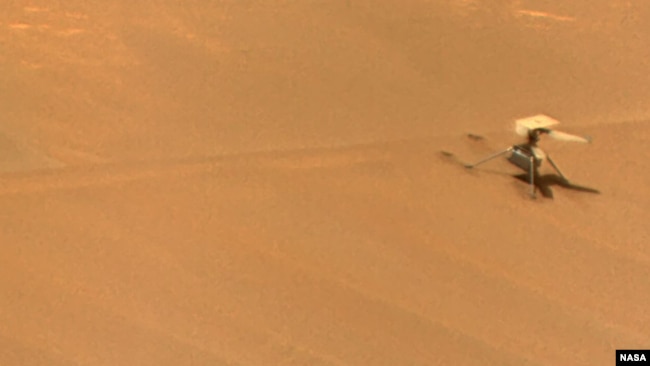
The American space agency NASA says it has found the likely cause of a crash that grounded its Mars helicopter Ingenuity.
The finding comes after NASA said it had carried out the “first aircraft accident investigation on another world.”
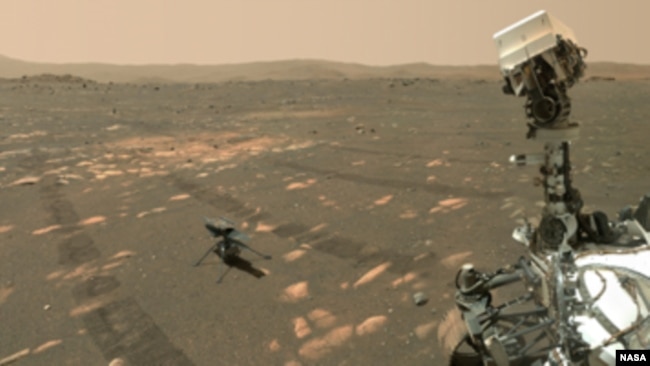
Ingenuity arrived on Mars along with NASA’s Perseverance explorer, or rover, in February 2021. The experimental helicopter took its last flight, number 72, in January. That flight ended in a hard landing on the Martian surface.
In April 2021, Ingenuity became the first aircraft to complete a powered, controlled flight on another planet. The aircraft was built to test take-off, short flight and landing operations. The flights on Mars aimed to support NASA’s efforts to build new aircraft that can fly in the atmospheres of other planets.
Engineers from NASA’s Jet Propulsion Laboratory in California fully investigated Ingenuity’s last flight on Mars. They found the cause of the crash was linked to the helicopter’s navigation system. That camera-based system was not able to collect dependable data on elements of the Martian surface to support a safe landing.
A detailed, final report on the accident is to be issued in the coming weeks. But the engineers have already described their main findings in a statement published online.
They said the helicopter’s last flight saw the aircraft climb to about 12 meters, where it stayed, or hovered, while capturing images of the Martian surface. Data records show Ingenuity began its planned descent after about 19 seconds. By 32 seconds, the helicopter was back on the surface and was no longer sending communication signals.
The next day, Ingenuity team members reestablished communications and received images from its last flight. The images showed the aircraft suffered severe damage to its rotor blades.
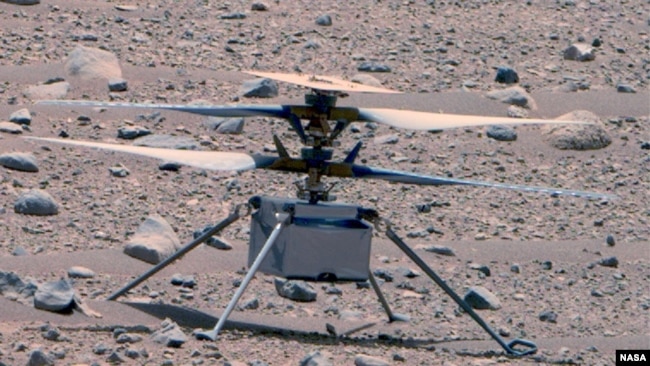
NASA explained that Ingenuity’s navigation system plays an important part in collecting data about the surface to ensure the aircraft can complete a smooth landing. The helicopter uses a camera that points downward, capturing information about what is below the craft.
In past flights, the engineers said the camera was able to find smooth, suitable landing possibilities. But NASA said during the final flight, the helicopter was traveling in an area with very few surface features for the camera to capture. This meant the aircraft’s navigation system could not find enough of these features to choose a good landing spot.
At the time, Ingenuity was operating together with NASA’s Perseverance rover in an area of Mars known as Jezero Crater.
The images recovered from Ingenuity suggested the navigation system’s inability to pick up surface features made the helicopter descend too fast. The hard landing on a sand hill is believed to have caused the helicopter to turn over and roll.
The engineers said images showed that all four of Ingenuity’s rotor blades broke at their weakest point. The damaged blades also caused the aircraft to shake. Events related to the crash led to increased power demand, which resulted in the loss of communications.
Although the crash ended Ingenuity’s flight operations, NASA said it is still able to provide and send back weather information and other kinds of data. The space agency says this information could be helpful in designing future aircraft or other explorers to be sent to Mars.
Teddy Tzanetos is Ingenuity’s project manager. He said in a statement one major thing the team learned was that future aircraft designed for space travel do not necessarily need to be large flying machines. Tzanetos added that Ingenuity’s longevity suggests that “not everything needs to be bigger, heavier, and radiation-hardened” to work in the Martian environment.
With this in mind, NASA engineers have been testing smaller, lighter flying vehicles, with limited electronics, in order to produce future helicopters that can make a large number of smaller exploration trips.
Tzanetos shared details about one aircraft NASA is currently developing. It is called the Mars Chopper rotorcraft. Tzanetos said Chopper is about 20 times heavier than Ingenuity. Developers say it would be built to carry several kilograms of science equipment, while self-exploring distant areas of Mars. Chopper would also have a much longer travel ability, flying up to 3 kilometers in a day. Ingenuity’s longest flight was 704 meters.
Tzanetos said that overall, “Ingenuity has given us the confidence and data to envision the future of flight at Mars.”
Words in This Story
navigation – n. finding directions by using maps or other equipment
rotor blade – n. thin, flat pieces of material that spin to make aircraft lift off the ground and travel
descent – n. the act or process of moving downward
feature – n. a common quality or important part of something
longevity – n. surviving for a long time
confidence – n. the feeling or belief that someone or some group is good or able to succeed at something
envision v. to picture oneself
NASA、火星ヘリコプターの最終墜落の原因を特定(和訳)
アメリカの宇宙機関NASAは、火星ヘリコプターインジェニュイティを墜落させた事故の原因と思われるものを突き止めたと発表しました。
この発見は、NASAが ”他の世界の初の航空機事故調査 ”を実施したと述べた後に発表されました。
インジェニュイティは2021年2月、NASAのパーセバランス探査機、惑星探査機とともに火星に到着しました。この実験用ヘリコプターは、1月に最後のフライト、飛行回数72回、を行いました。その飛行は火星表面へのハードランディングで終わわりました。
2021年4月、インジェニュイティは他の惑星で動力制御飛行を完了した最初の航空機となりました。この航空機は、離陸、短距離飛行、着陸操作をテストするために製造されました。火星での飛行は、他の惑星の大気圏で飛行できる新しい航空機を製造するNASAの取り組みを支援することを目的としていました。
カリフォルニアにあるNASAジェット推進研究所のエンジニアたちは、インジェニュイティの火星での最後の飛行を完全に調査しました。その結果、墜落の原因はヘリコプターのナビゲーション・システムに関連していることが判明しました。そのカメラベースのシステムは、安全な着陸をサポートする火星表面の要素に関する信頼できるデータを収集することができませんでした。
事故に関する詳細な最終報告書は数週間以内に発行される予定です。しかし、エンジニアたちはすでにオンラインで発表した声明の中で、主な調査結果を述べています。
彼らによると、ヘリコプターの最後の飛行では、機体は約12メートルまで上昇し、そこで火星の表面の画像を撮影しながらホバリングしていたということです。データ記録によると、インジェニュイティは約19秒後に計画した降下を開始しました。32秒後、ヘリコプターは地表に戻り、通信信号は送信されなくなりました。
翌日、インジェニュイティのチームメンバーは通信を再開し、最後のフライトの画像を受け取りました。その画像は、機体がローターブレード(航空機が地面から浮き上がって移動するために回転する、薄くて平らな素材)に深刻なダメージを負っていることを示していました。
NASAは、インジェニュイティのナビゲーション・システムが、航空機がスムーズに着陸できるように地表のデータを収集する上で重要な役割を果たしていると説明しています。ヘリコプターは下を向いたカメラを使用し、機体の下にあるものの情報を取得します。
過去の飛行では、このカメラはスムーズで適切な着陸の可能性を見つけることができたとエンジニアは述べています。しかしNASAによると、最終フライトの間、ヘリコプターはカメラが捉えるべき地表の特徴featuresがほとんどない場所を移動していました。これは、航空機のナビゲーション・システムが着陸地点を選ぶのに十分な地形を見つけられなかったことを意味します。
当時、インジェニュイティはNASAの探査車パーセバランスとともに火星のジェゼロ・クレーターと呼ばれる地域で活動していました。
インジェニュイティから回収された画像は、ナビゲーション・システムが地表の特徴を拾い上げることができなかったため、ヘリコプターの降下速度が速すぎたことを示唆していました。砂丘へのハードランディングは、ヘリコプターがひっくり返って横転する原因になったと考えられています。
エンジニアらによると、画像からインジェニュイティのローターブレード4枚すべてが最も弱い箇所で破損していることがわかったと言います。破損したブレードは機体を揺らす原因にもなりました。墜落に関連して電力需要が増大し、通信が途絶えたのです。
今回の墜落でインジェニュイティの飛行は終了しましたが、NASAによると、気象情報やその他のデータを提供し、送り返すことは可能だと言います。NASAによれば、これらの情報は、将来火星に送られる航空機や探査機の設計に役立つ可能性があると言います。
テディ・ツァネトス氏は、インジェニュイティのプロジェクト・マネージャーです。彼は声明の中で、チームが学んだ重要なことのひとつは、宇宙旅行用に設計された将来の航空機は、必ずしも大型の飛行機械である必要はないということだと述べてります。ツァネトス氏は、インジェニュイティの寿命longevity の長さは、火星の環境で機能するために”すべてがより大きく、より重く、放射線に強くなる必要はない”ことを示唆していると付け加えています。
このことを念頭に置いて、NASAのエンジニアたちは、小規模な探査を数多くこなせる将来のヘリコプターを製造するために、電子機器を制限した小型で軽量の飛行体をテストしています。
ツァネトス氏は、NASAが現在開発中の航空機の詳細を話してくれました。それはマーズ・チョッパーと呼ばれる回転翼機です。ツァネトス氏によると、チョッパーはIインジェニュイティの約20倍重いと言います。開発者によれば、数キログラムの科学機器を搭載し、火星の遠方地域を自力で探査できるように設計されていると言います。チョッパーはまた、1日に3キロメートルも飛行することができます。インジェニュイティの最長飛行は704メートルでした。
ツァネトス氏は、全体として 「インジェニュイティは、火星での飛行の未来を思い描くenvisionための自信confidenceとデータを与えてくれた 」と述べています。
