天空ショー、2025
ワクワク、ドキドキですね〜!!
オーロラ、今年はさらに多く見られるそうですが
2025天空ショーのスケジュールは?♡♡♡
The Sky Promises Many Big Events in 2025
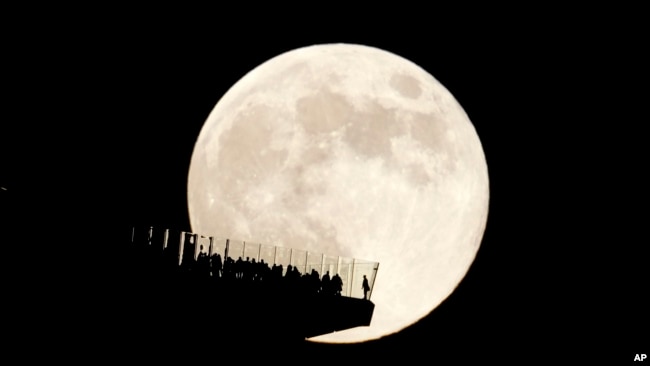
The world will have to wait until 2026 for the next total solar eclipse. However, the sky promises plenty of other big events in 2025.
The new year starts off with a six-planet parade in January that people will be able to see for weeks. The smallest planet, Mercury, will join the crowd for a seven-planet line in February.
The Planetary Society’s chief scientist Bruce Betts said about the visible planets, “People should go out and see them sometime during the next many weeks. I certainly will.”
Here is a look ahead to the major sky events in 2025:
Eclipses
The moon will disappear for more than an hour over North and South America on March 14. The event will be followed two weeks later by a partial solar eclipse. People in Maine, eastern Canada, Greenland, Europe, Siberia and northwestern Africa will be able to watch the show.
In September, there will be an even longer total lunar eclipse over Europe, Asia, Africa and Australia. Two weeks later, a partial solar eclipse will take place in the area over the South Pacific, including New Zealand and parts of Antarctica.
Supermoons
Three supermoons are coming this year in October, November and December.
The full moon will look especially big and bright those three months as it orbits closer to Earth than usual.
November’s supermoon will come closest, passing within 356,980 kilometers from Earth. Last year had four supermoons, ending in November.
Planet parade
This month, six of our seven neighboring planets will line up in the sky to form a long arc. All but Neptune and Uranus should be visible with the eye just after sunset, weather permitting.
The parade will continue for weeks. Mercury will make a short appearance by the end of February. The planets will slowly exit, one by one, through spring.

Northern and southern lights
Geomagnetic storms painted the sky with beautiful colors in unexpected places last year.
Space weather experts predict more of these storms this year. Such storms could produce even more northern and southern lights.
The reasoning for the prediction is that the sun has reached its solar maximum during its current 11-year cycle. The cycle could continue through this year. The National Oceanic and Atmospheric Administration’s Shawn Dahl urges everyone to follow space weather news, so as not to miss any colorful shows.
Meteor showers
The Perseid and Geminid meteor events, or showers, are well-known crowd-pleasers. The Perseids will take place in August. The Geminids come in December. But do not forget about the smaller meteor showers including the Lyrids in April, the Orionids in October and the Leonids in November.
Areas away from cities, where night skies are darker, are best for watching the events. Generally, meteor showers are named for the constellation which they appear to come from. They take place whenever Earth moves through paths of debris left behind by comets and sometimes asteroids.
Words in This Story
eclipse – n. the total or partial obscuring of one celestial body by another
supermoon – n. a kind of full moon that takes place when the moon is at or near the closest point to earth in its orbit
arc – n. a special kind of curved or arched path
maximum – n. the upper limit; the highest or furthest point
cycle – n. a course or series of events or operations that happen regularly
constellation – n. a configuration of stars
debris – n. the remains of something (often said of something that has been destroyed or broken)
2025年、空は多くのビッグイベントを約束する(和訳)
次回の皆既日食total solar eclipseは2026年まで待たねばなりません。しかし、2025年の空は、他にもたくさんのビッグイベントを約束しています。
※solar eclipse 日食:月が太陽の前を横切るために、太陽の一部又は全部が隠される現象
lunar eclipse 月食: 地球が月と太陽の間に入った結果、月が地球の影に入ってしまい、
一部又は全部が、見えなくなる現象
新年は1月の6惑星のパレードで始まり、人々は何週間もそれを見ることができるルでしょう。2月には、最も小さい惑星である水星も7惑星パレードに加わります。
惑星協会のチーフ・サイエンティストであるブルース・ベッツ氏は、見える惑星についてこう語っている。「これから何週間かの間に、みんなそれらを見に行くべきだね。私はそうするつもりだよ。」
ここでは、2025年の主な天体イベントを紹介しましょう:
Eclipses 蝕
3月14日、南北アメリカ上空で月が1時間以上欠けるでしょう。その2週間後には部分日食が起こります。メイン州、カナダ東部、グリーンランド、ヨーロッパ、シベリア、アフリカ北西部の人々がこのショーを見ることができるでしょう。
9月には、ヨーロッパ、アジア、アフリカ、オーストラリアでさらに長い皆既月食が起こります。その2週間後には、ニュージーランドと南極大陸の一部を含む南太平洋上空で部分日食が起こるでしょう。
Supermoons スーパームーン
今年は10月、11月、12月に3つのスーパームーンがやってくきます。
満月は通常よりも地球に近い軌道を回るため、この3ヶ月は特に大きく明るく見えるでしょう。
11月のスーパームーンは最も接近し、地球から356,980km以内を通過します。昨年は11月までにに4回のスーパームーンがありました。
Planet parade 惑星のパレード
今月は、近隣の7つの惑星のうち6つが空に並び、長い弧arcを描きます。海王星Neptuneと天王星Uranus[jʊ́(ə)rənəs]以外は、天気が良ければ日没直後に肉眼で見えるはずです。
このパレードは数週間続きます。水星Mercuryは2月末までに短く姿を現します。惑星は春にかけて、ひとつずつゆっくりと姿を消していきます。
Northern and southern lights ノーザンライツとサウザンライツ
北極光と南極光(オーロラ)
※北半球では、オーロラをthe Northern lights
南半球では、オーロラをthe Southern lights
地磁気嵐は昨年、思いがけない場所で空を美しい色に染めました。
宇宙気象の専門家たちは、今年もこのような嵐が発生すると予測しています。そのような嵐は、さらに多くの北極光や南極光を生み出す可能性があります。
この予測の根拠は、太陽が現在の11年周期cycleで太陽極大期solar maximumに達しているからです。このサイクルは今年まで続く可能性があります。米国海洋大気庁のショーン・ダール氏は、カラフルなショーを見逃さないよう、宇宙天気ニュースをフォローするよう呼びかけています。
Meteor showers 流星群
ペルセウス座流星群The Perseidとふたご座流星群Geminidは、人々を魅了する流星群として知られています。ペルセウス座流星群は8月。ふたご座流星群は12月にやってきます。しかし、4月のこと座流星群the Lyrids、10月のオリオン座流星群the Orionids、11月のしし座 流星群the Leonidsなどの小さな流星群も忘れてはなりません。
流星群を見るには、夜空が暗い都市部から離れた地域が適しています。一般的に流星群は、その流星が出現する星座constellationにちなんで命名されます。流星群は、地球が彗星や時には小惑星によって残された破片debrisの通り道を通過するたびに起こります。
